
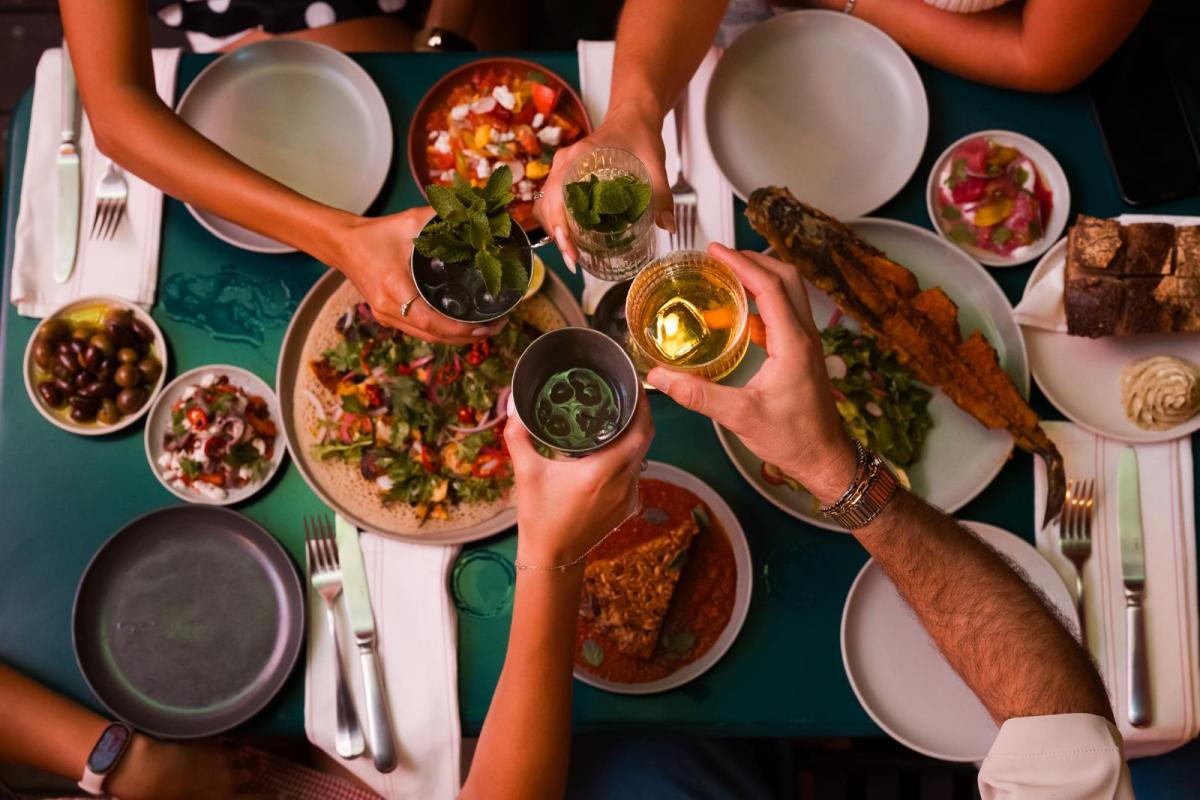
Some places you go to eat, some you go to for a drink, and some are where you end the night on the dance floor. House of Delray, which opened on HaLel ha-Zaken Street a few steps from the Carmel Market, decided there's no reason to choose. It's a new Tel Aviv complex bringing together an intimate eight-room boutique hotel, a restaurant, a private bar and a downstairs club, all under one roof, with a rooftop that looks out over the city. You can start the evening with dinner, move on to a cocktail, head down to dance, and if you really get carried away, go up to a room and stay the night. In other words: you walk in through one door, and there's no reason to walk back out until morning.
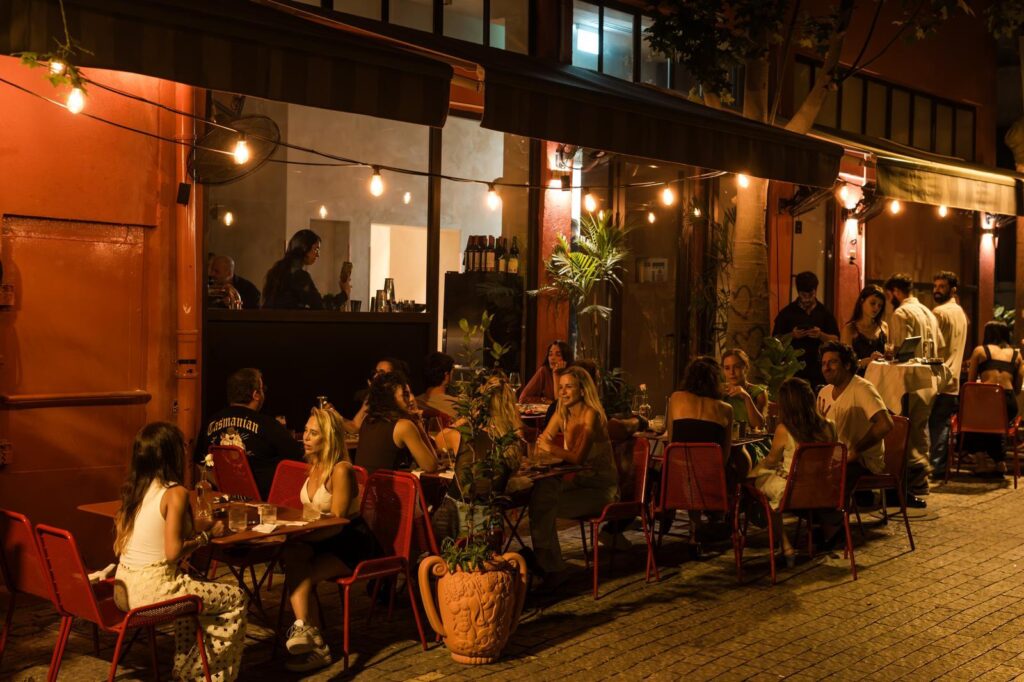
The concept somewhat recalls Soho House locations around the world, the kind of places that combine a hotel, restaurant, bar, events and nightlife, drawing in creatives and nightlife regulars who want everything waiting for them in one building. House of Delray isn't a closed members' club, but it plays on the same appealing idea: building a small, stylish and slightly mysterious world you can disappear into for a few hours.
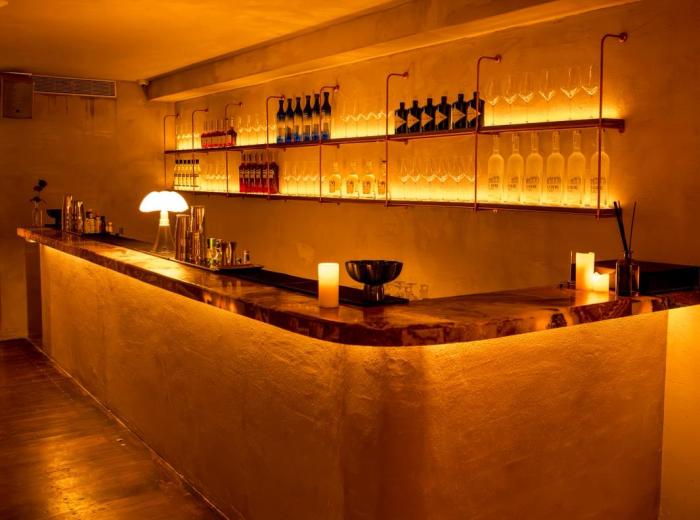
From the entrance, it's clear this place is aiming to be much more than a restaurant. The building, designed by architect David Libertal with interior design by Orit Porat, blends a small urban hotel with a hospitality venue that wants to be part of the neighborhood's nightlife. It has a garden, hosting spaces, and seating that spills out onto the pedestrian street.
In total, the restaurant offers 60 seats, 25 in the courtyard and another 35 outside, so the street itself becomes part of the scene. It's a place to see and be seen, but without the stiffness of a fine-dining restaurant. The crowd is varied, the atmosphere relaxed, and the lines between dinner, a night out and a party start to blur as the hour gets later.
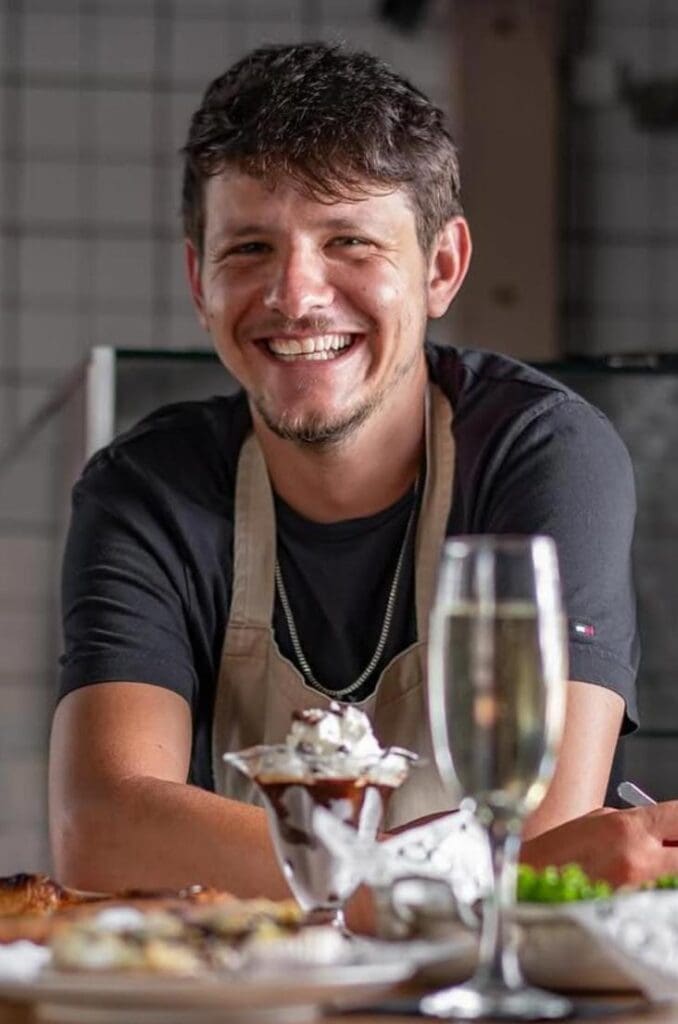
The kitchen is led by chef Mayan Simcha, who built a menu based on what's found just around the corner. In the mornings he walks the market stalls, meets suppliers and picks fish, vegetables, herbs, hot peppers and olive oil by season, and by whatever looks and smells right that day.
Simcha grew up in Jerusalem and learned the basics of Jerusalem cooking, and the importance of good ingredients and flavors that don't hide, in his grandmother's kitchen. He later worked in the kitchens of Tel Aviv restaurants like L'Autre, Taizu and A. All of these stops show up on the menu: colorful local food on one hand, and Asian, Japanese and contemporary techniques and influences on the other.
Chef Yuval Ben Neriah, who joined the venture as a business partner, is involved in shaping the culinary concept and building the hospitality experience. His partnership with Simcha naturally raises expectations, and the kitchen does indeed operate somewhere between the Carmel Market, Tel Aviv and Tokyo.
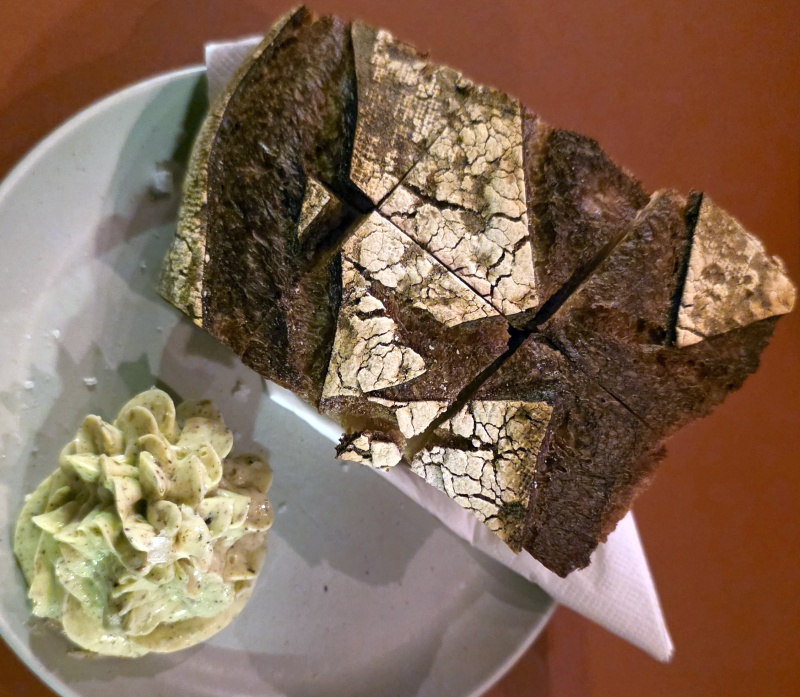
We started with the house bread, whipped butter and za'atar (38 NIS). The bread is rich and warm, the butter airy, and the za'atar brings the market straight to the table. It's a seemingly simple opening, but one that makes clear the direction: local ingredients handled with precision, without losing their character.
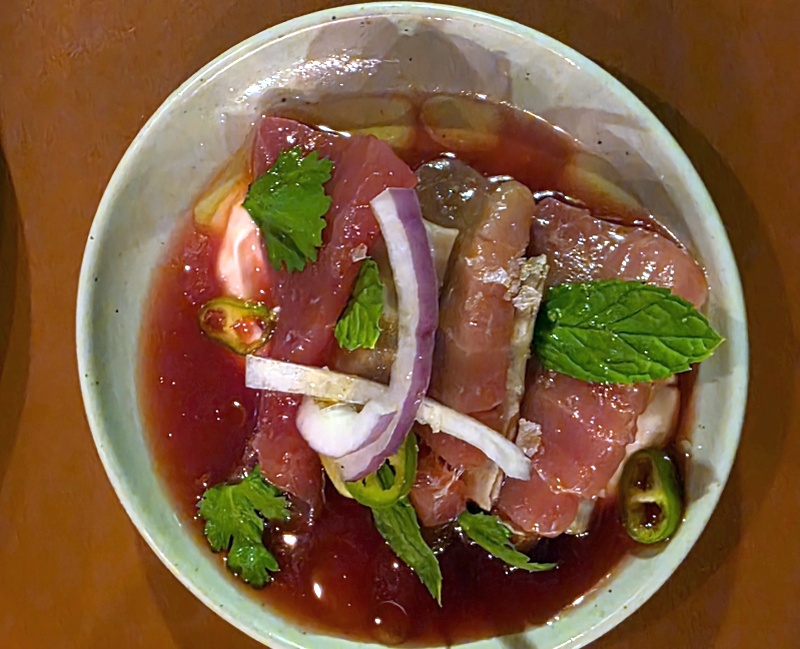
Next was bluefin tuna sashimi (52 NIS), served with roasted-beet ponzu, Greek yogurt, olive oil, green chili, cilantro, red onion and mint. It's a colorful, fresh, very Tel Aviv dish. The tuna is delicate, the ponzu adds tartness and an earthy sweetness, and the yogurt softens the heat. There's no shortage of components, but they work together without burying the fish.
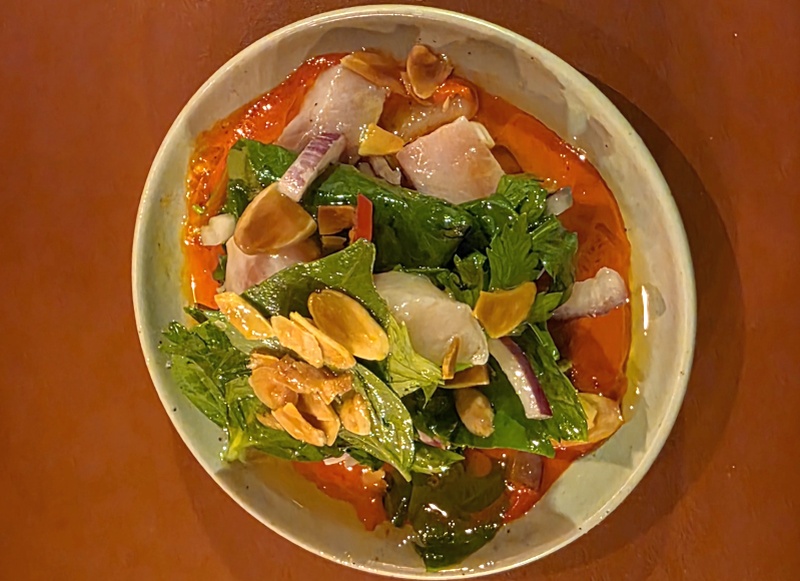
The hamachi ceviche (54 NIS) continued the same game between sea, market and Asia. Chili paste, red onion, mint, oregano, basil, toasted almonds and lime wrapped the fish in layers of heat, tartness and freshness. It's a sharp, almost cheeky dish, the kind that wakes up your palate and immediately calls for another cocktail.
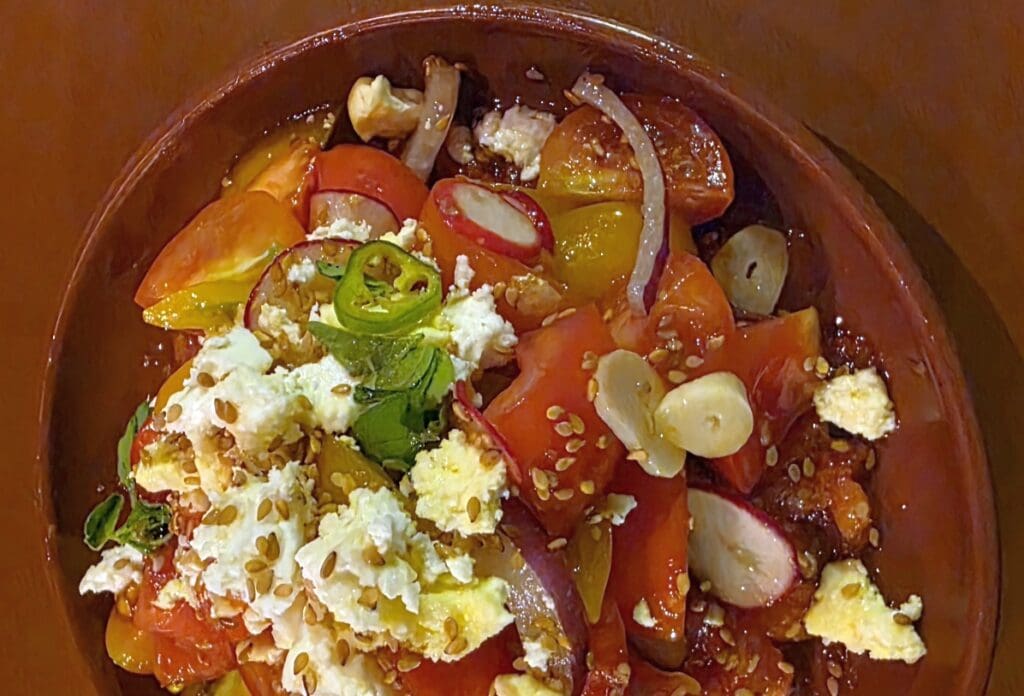
The tomato salad (54 NIS) is also far from just another salad on the table to check the vegetables box. It comes with sheep's feta, fresh za'atar, red onion, green chili, egg yolk, radish, garlic and sesame. It's a rich, local salad that manages to feel both familiar and surprising, depending which bite lands the yolk, the feta or the chili. A small dish meant for sharing.
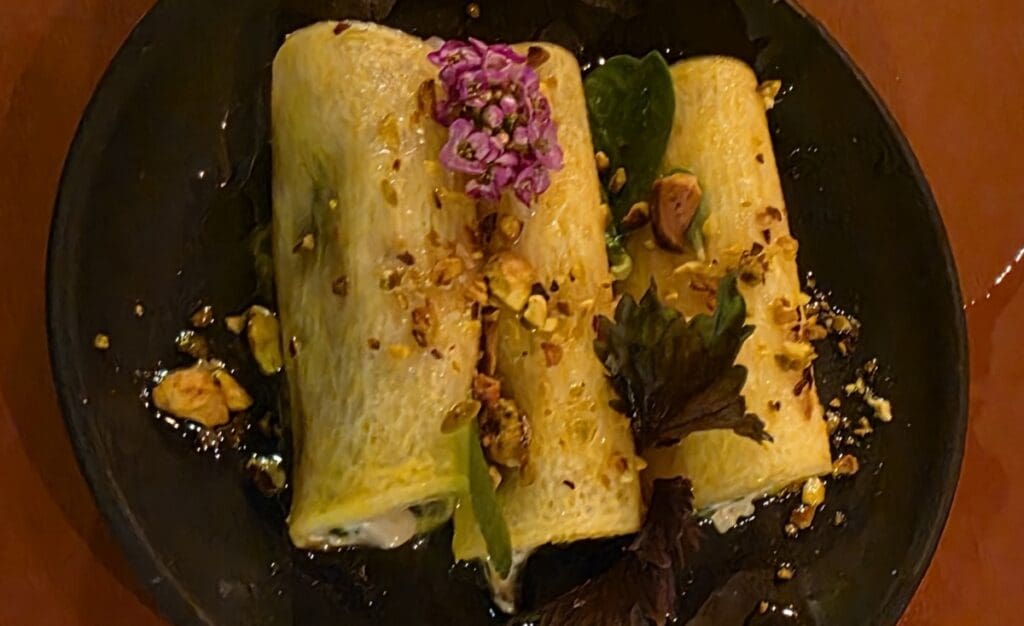
Another shared dish we ordered was the sea fish tartare (38 NIS): pistachio, red onion, chili, mint, creme fraiche, delicata squash and purslane. The fresh fish got a gentle heat from the chili and freshness from the mint, while the red onion and purslane added a pleasant crunch and tang.
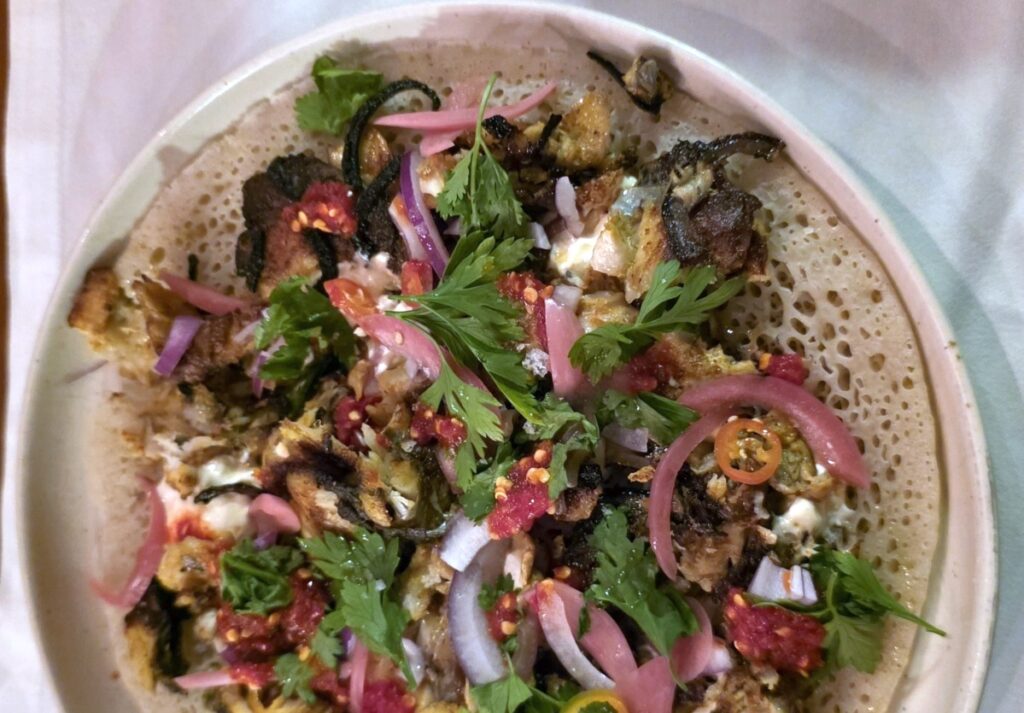
One of the most intriguing dishes on the menu is the fish shawarma (112 NIS): lachuch topped with fish, preserved lemon aioli, chili, pickled onion, tarragon, fermented hot sauce and cilantro. It's a dish that comes with a lot of confidence, and earns it. The lachuch soaks up the sauces and fish juices, the preserved lemon lifts the flavors, and the fermented hot sauce gives a small kick right when a bite starts to feel too comfortable. This is shawarma that had a wild night out with a creative chef and woke up the next morning as a restaurant dish.
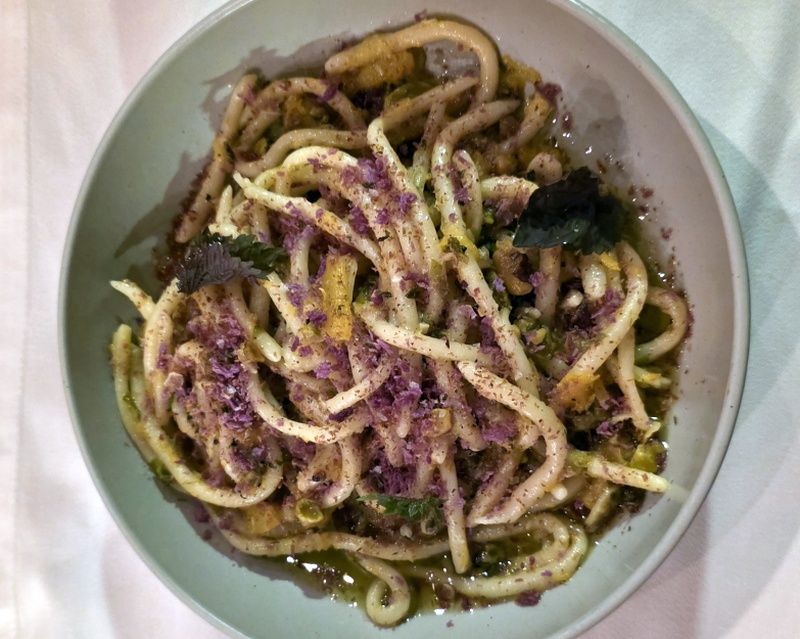
We also ordered the summer pici (88 NIS), with squash, pistachios, garlic, capers, tarragon and seasoned panko. The thick, chewy pasta gets a rich coating of sweetness, saltiness and crunch. The squash adds softness, the capers cut through the sweetness, and the pistachios and panko make sure the dish is never sleepy for a moment.
We asked for a tour of the place, whose design is polished, urban-romantic, and feels like it could be abroad. The rooms are spacious, and chic art decorates the walls. We also visited the downstairs club, where the evening shifts gears. The buttoned-up restaurant gradually gives way to low lights, music, and people who clearly aren't planning to head home early.
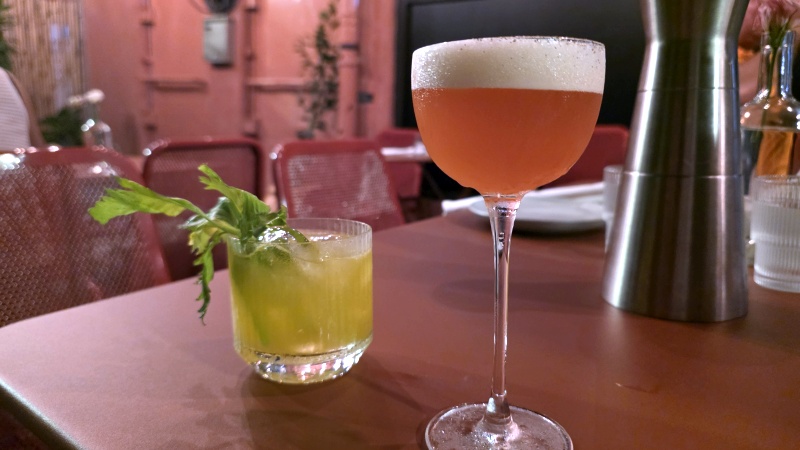
We went back and checked out the drinks menu, which includes original cocktails, spritzes, classics and wines, and is clearly built to keep the evening going long after the plates are cleared. Our server recommended the Monroe (64 NIS): Finlandia vodka, Aperol, white vermouth, chai and sweet strawberries, a fruity, elegant, slightly sweet cocktail. The Maracuya Picante (64 NIS) has a wilder character: tequila blanco, mezcal, passion fruit, celery, agave and hot sauce come together into a drink that's tart, spicy and smoky. It's a cocktail that opens sweet, starts to sting, then leaves behind a smoky finish, exactly what you need before heading down to the club.
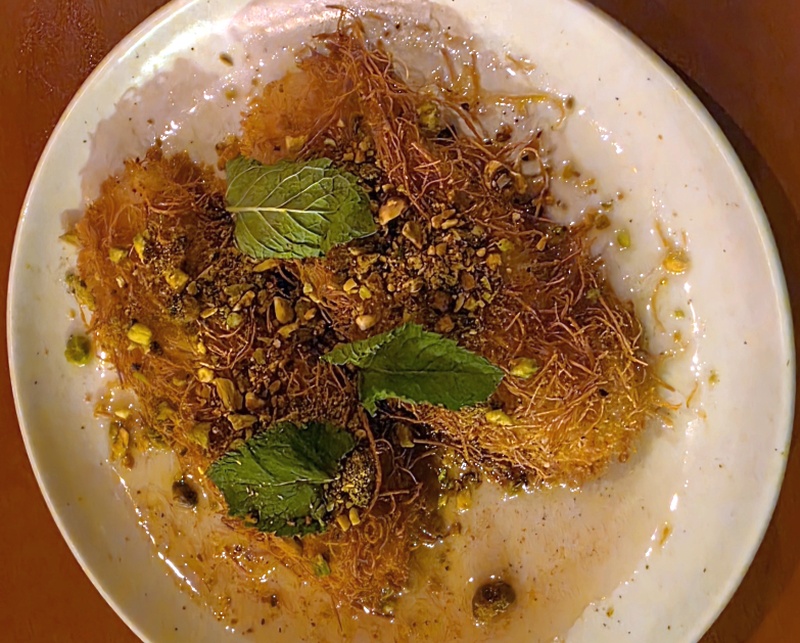
We ended the evening with a homemade knafeh (48 NIS) with pistachios, mint and cinnamon. This knafeh respects the original, but speaks the language of this place: sweet, warm, aromatic and beautiful. The cinnamon brings warmth, and the pistachios add the crunch you'd expect. Prices here aren't low, though not very high either, but the experience you get is worth a lot more than an ordinary meal.
The food is precise and full of life, the ingredients take center stage, and the atmosphere loosens up as the night goes on. In a city where a night out often means moving from restaurant to bar to club, there's something joyful about a place that says: stay, it's all already here.
House of Delray, HaLel ha-Zaken St 8, Tel Aviv. Monday to Saturday from 7 PM until the last guest leaves. Reservations: www.the-delray.com
Comments
0