
Homemade pita almost always bakes in an oven at maximum heat, since only that kind of heat can puff it up fast. A home oven struggles to reach the temperature a bakery oven does, so pita cooked in a heavy skillet on high heat is a real alternative, not a compromise.
Why a skillet instead of the oven
Cast iron or another heavy skillet holds heat differently than an oven: it stays scorching hot continuously, unlike an oven chamber that loses heat every time you open the door. The dough touches that hot surface directly, and that's what causes it to puff up within a minute or two on each side, without needing an industrial oven's temperature.
The skillet has to be completely dry, with no oil. Oil on the surface stops the dough from forming that first layer that sticks and puffs, and instead the pita stays flat.
A simple yeast dough, no tricks
The dough itself is basic yeast dough: flour, water, yeast, oil, salt, and a pinch of sugar to feed the yeast. One hour of rising at room temperature is enough, no need for a second, longer rise like bread dough gets.
Roll each ball of dough into a relatively thin round, since a round that's too thick doesn't have enough time to puff up during its short time on the skillet and stays hard in the center.
Stovetop Pita Bread, No Oven Needed
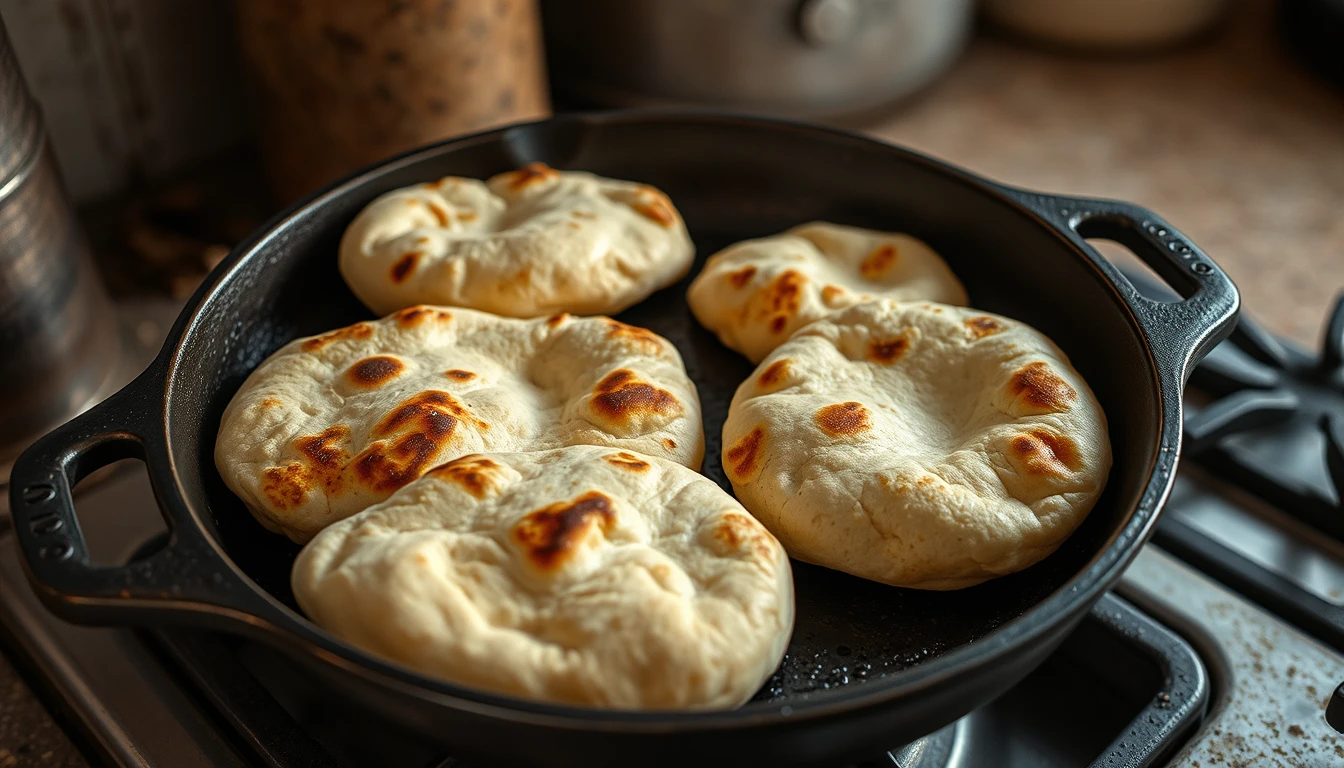
Homemade yeast pita breads cooked in a heavy skillet on high heat, no oven, puffing up within a minute or two.
Ingredients
- 24 oz / 680 g all-purpose flour (about 3 cups)
- 8 fl oz / 240 ml warm water
- 2 tsp active dry yeast
- 1 tsp sugar
- 1 tsp salt
- 2 tbsp canola oil
Instructions
Dissolve the yeast and sugar in the warm water and let sit 5 minutes until slightly foamy.
Mix the flour and salt in a large bowl, make a well in the center, and pour in the yeast mixture and oil.
Knead about 8 minutes until you get a smooth, elastic dough.
Cover and let rise at room temperature for an hour, until doubled in size.
Divide into fist-sized balls and roll each into a thin round.
Heat a heavy, dry skillet over high heat until it's truly scorching.
Cook each pita about a minute and a half per side, until puffed with light charring spots.
Frequently Asked Questions
Why isn't my pita puffing up?
Usually the skillet wasn't hot enough before the dough went on, or the dough was rolled too thick.
Can I freeze the pitas?
Yes, once fully cooled, in a sealed container up to a month, reheated briefly in a skillet before serving.
Does this go well with the kebabs?
Yes, grilled kebabs that don't fall apart fit right into a warm pita.
Comments
0