
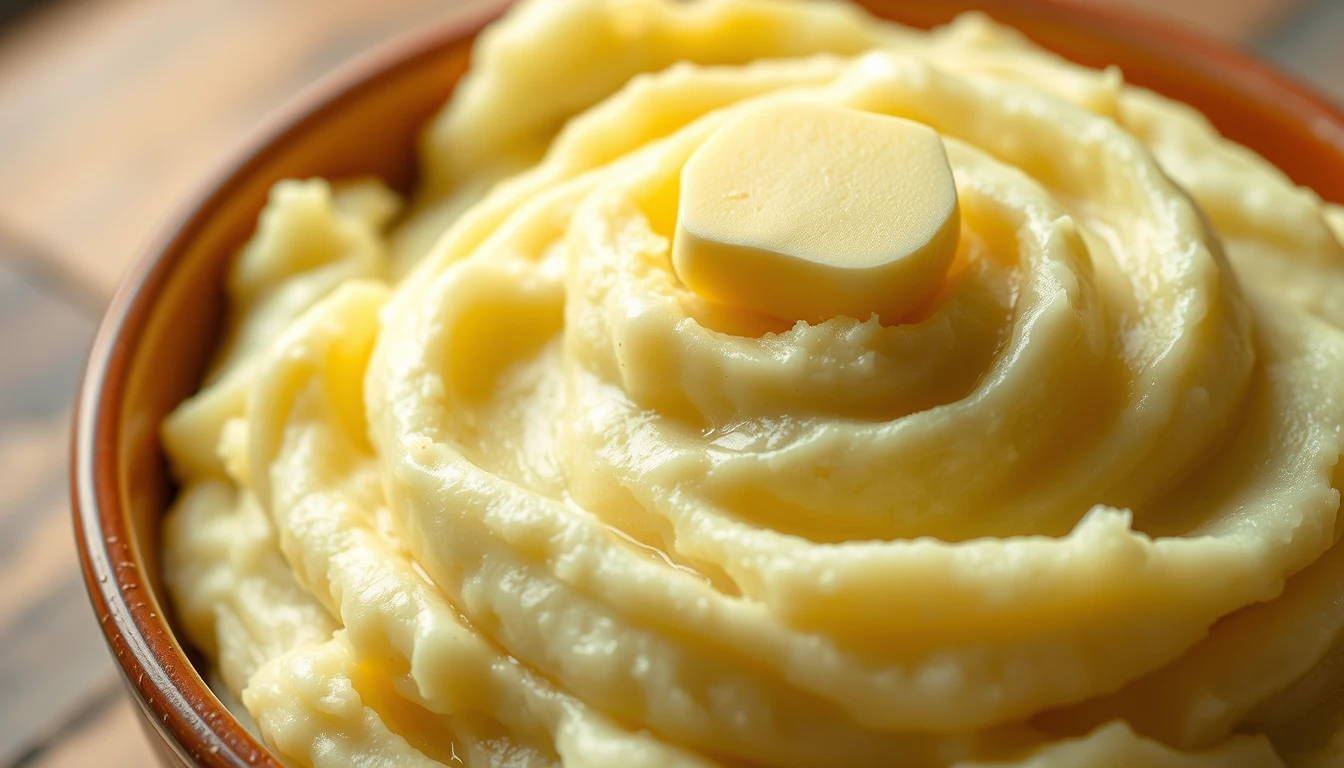
Extra-smooth mashed potatoes for the pre-fast meal, with a method that genuinely produces a silky texture: the potatoes go through a ricer, not a food processor, and the liquid goes in warm, not cold.
Why a food processor ruins mash
A food processor's blades break down the potato's starch cells too aggressively, releasing excess starch that turns the puree gluey and gummy instead of light and smooth. A ricer or food mill passes gently through the cells without tearing them apart.
Mashing by hand with a regular potato masher works well too, not only a ricer, as long as you stop the moment the mixture is smooth. Mashing too long wrecks the texture just like a food processor does, even without any blades involved.
What temperature to add the liquid
The milk and butter need to be warm when added to the potatoes. Cold liquid shocks the starch suddenly, and the result is a heavy, gluey mash instead of a light, silky one.
What to do with leftover mash the next day
Refrigerate leftover mash in a sealed container for up to three days. Reheat slowly over low heat with a splash more warm milk, stirring constantly so it doesn't stick and dry out. The microwave works too, in short bursts with stirring between, though the result is less even than the stove.
Extra-Smooth Mash for the Pre-Fast Meal
Ultra-smooth mashed potatoes made with a ricer and warm dairy.
- Servings 6 servings
- Prep 10 min
- Cook 25 min
- Total 35 min
Ingredients
Instructions
Boil the potatoes in salted water until very tender, about twenty minutes.
Drain well and let steam off for a minute.
Pass through a ricer or food mill while still hot, not a food processor.
Warm the milk separately.
Return the riced potatoes to the pot over low heat, and gradually stir in the warm butter and milk, a little at a time, until silky smooth.
Season with salt to taste.
Serve immediately.
Frequently Asked Questions
Can I make the mash ahead?
Best fresh, but you can keep it warm covered over a pot of simmering water for about an hour, stirring in a bit more warm milk before serving.
Which potatoes work best?
Starchy potatoes, like Yukon gold, give the smoothest texture.
Can I swap some of the milk for cream?
Yes, that adds even more silkiness. You can replace part of the milk with heavy cream.
Can I freeze mashed potatoes?
Not recommended. The high starch content makes mash separate and turn grainy after thawing.



Comments
0