
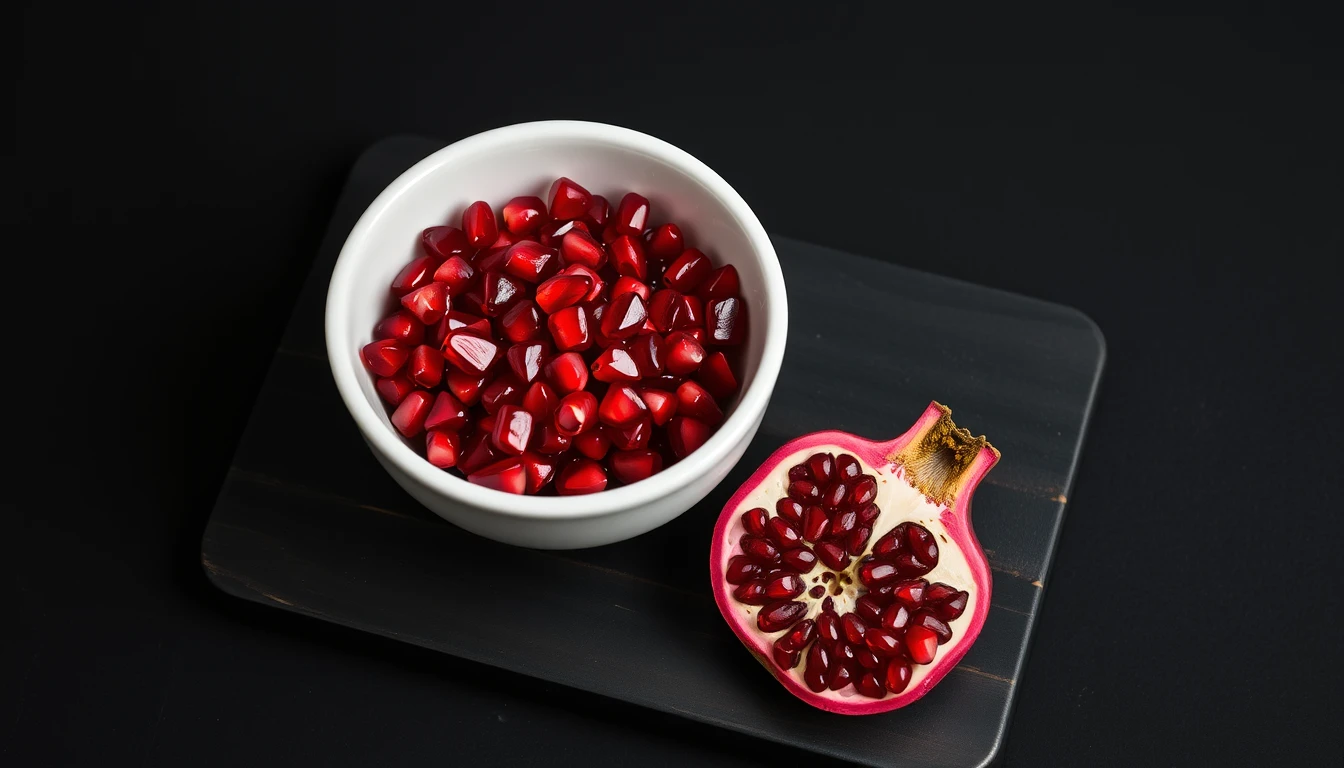
Seeding a pomegranate takes about two minutes with the underwater method, without a single stain on your clothes or the counter. The whole trick is opening and separating the pomegranate inside a bowl of water, so the juice that releases stays in the bowl instead of spraying everywhere.
Why working underwater matters
The moment you break apart a pomegranate in the open air, every bit of pressure on the seeds releases droplets of juice that splatter sideways and stain everything nearby. Doing the same thing inside a bowl full of water keeps that juice contained in the water and away from anything outside the bowl. Another advantage is that the seeds sink to the bottom on their own weight, while the white membrane pieces float to the top, so the separation happens by itself without picking through membranes one at a time.
How to cut without damaging the seeds
On the outside of a pomegranate's skin, you can see faint ridge lines that mark exactly where the internal membrane walls sit. Scoring along those lines, from the crown down to the base, opens the fruit precisely along its natural sections instead of cutting through the seeds themselves. Do not press the knife in too deep. It only needs to cut through the outer skin, letting your hands finish opening it gently underwater.
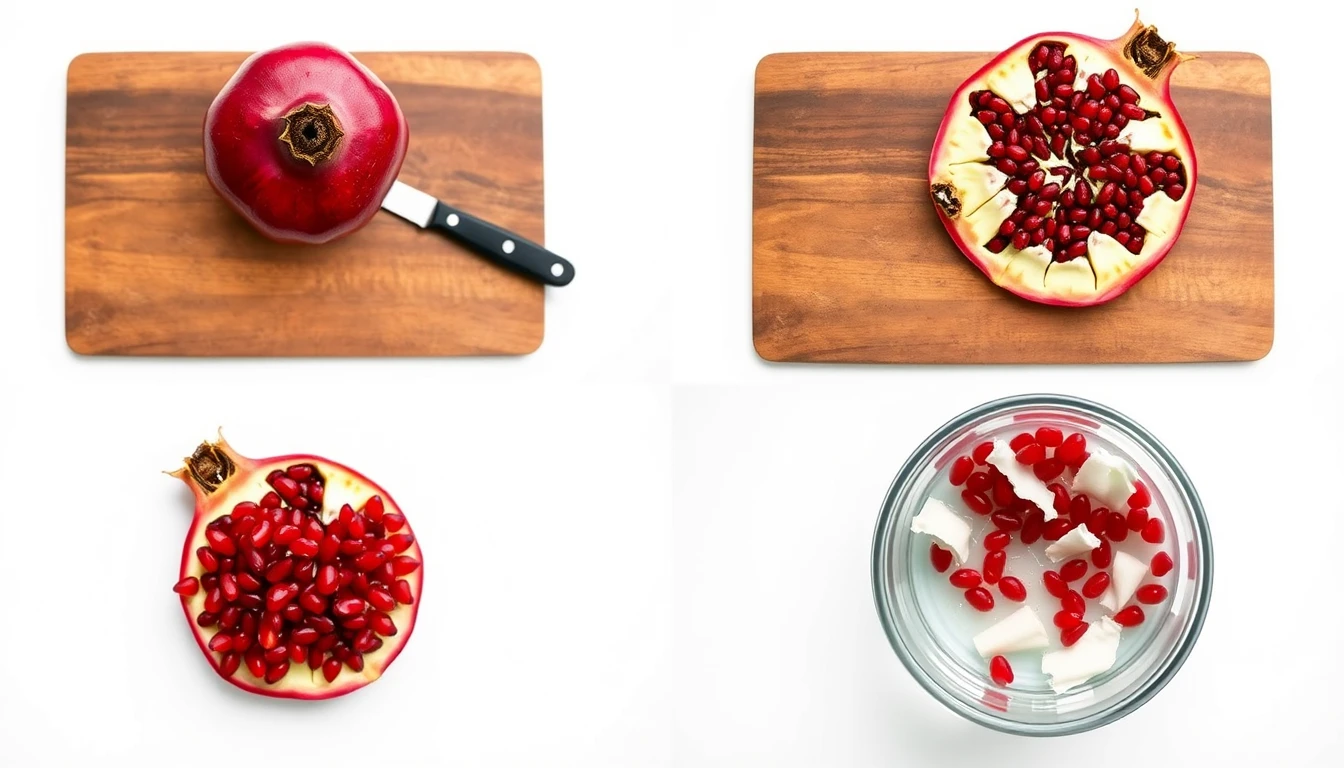
- Remove the crown, the dried leafy top of the fruit.
- Score along the ridge lines from the crown to the base.
- Open the pomegranate into a large bowl of water so it splits into sections underwater, then gently break apart each section with your fingers underwater, letting the seeds release and sink while the white membrane floats up.
- Strain the water through a sieve, skim off the floating membrane, and pat the seeds dry with a paper towel before using them.
Frequently Asked Questions
Why do the seeds sink while the membrane floats?
The seeds are full of juice and denser than water, while the white membrane is spongy and holds air, so the density difference separates them automatically inside the bowl.
What if the pomegranate is hard to open?
A ripe pomegranate opens fairly easily along the scored lines. If there is strong resistance, score one more line through the middle to split it into four sections instead of two.
How long can I keep the seeds in the fridge?
Up to five days in a sealed container, but make sure they are well dried first, since leftover moisture shortens their shelf life.
Can I freeze pomegranate seeds?
Yes, spread them in a single layer on a tray until frozen, then transfer to a bag so they do not clump together.




Comments
0