

In 2026 the Israeli wine industry faces a crisis on several fronts at once, in which an unprecedented economic trap and the leafroll 3 virus feed on each other. Anyone who has followed my columns over the past decade knows I have never held back from criticizing the industry's failures, but what we are seeing now is a new peak of blindness and systemic neglect.
The link between the economic crisis and the biological one is simple and brutal. Because of extreme grape surpluses, falling demand and the closing of export markets, growers are bleeding money. With no cash on hand, they simply cannot pay the high cost of uprooting diseased plots and disinfecting the soil. The result is thousands of dunams (a dunam is about a quarter of an acre) of infected vines left in the ground, turning into biological time bombs. These hotspots are now spreading the virus at a dizzying pace, infecting the young, healthy vineyards planted in recent years. A true act of the wise men of Chelm.
The industry is drowning in a surplus of poor, diseased fruit, and the Ministry of Agriculture keeps standing on the sidelines. To understand how deep the crisis runs and the mechanism that drives it, this chronicle has to be taken apart step by step.
Stage one: the 2026 harvest, economic madness and the great flood
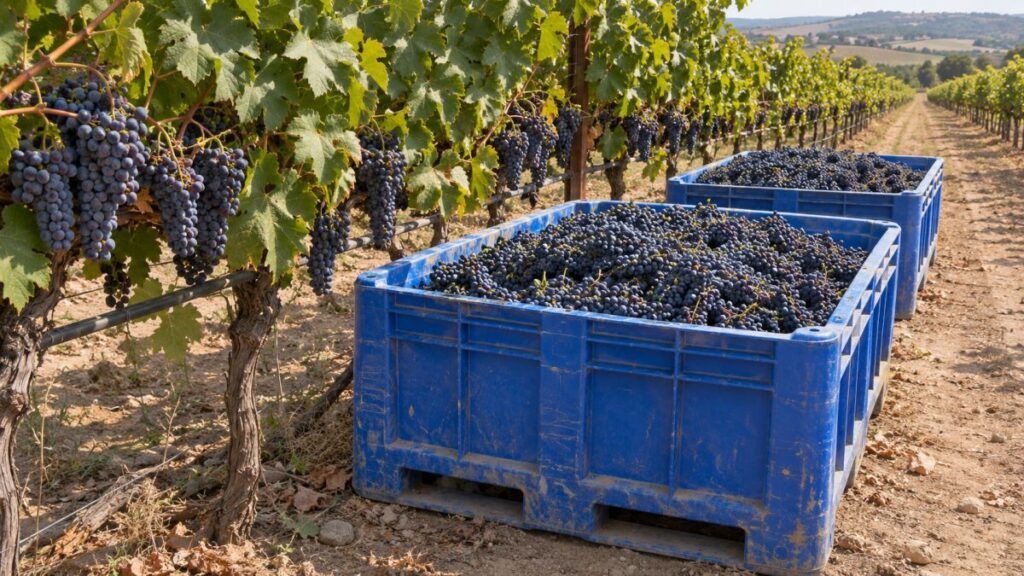
The 2026 harvest will be remembered as the turning point when the bubble burst with a loud bang. The quantities of grapes that reached the wineries were huge and unprecedented, and they led to an absurd situation: growers begged for their lives and tried to sell fruit at any price, just so they would not have to watch the fruit of their labor rot on the vine.
By elementary economic logic, if global and local demand for wine keeps falling, and export markets close one after another because of political boycotts, the last thing to do is increase production.
But in the Israeli wine industry, logic died long ago. From 2022 to 2025 we watched a display of collective blindness. The Israel Wine Grape Board supplied the industry with clean, healthy propagation material. The wineries and growers rushed to plant thousands of dunams of it, but "forgot" to do the most obvious thing: uproot the old, infected vines at the same time to make room for healthy ones.
Now the thousands of newly planted dunams have all reached full yield at once. The result? The market is flooded, winery warehouses are packed to the rafters with bottles nobody wants, and the wineries themselves are bound by draconian purchase contracts that force them to take in more and more grapes they do not need. The system is drowning in grapes, and the road to mass bankruptcies has never been shorter. This monstrous economic surplus prepares the ground for the next, even deadlier stage: the biological disaster.
Stage two: the biological trap, leafroll strikes again on scorched ground
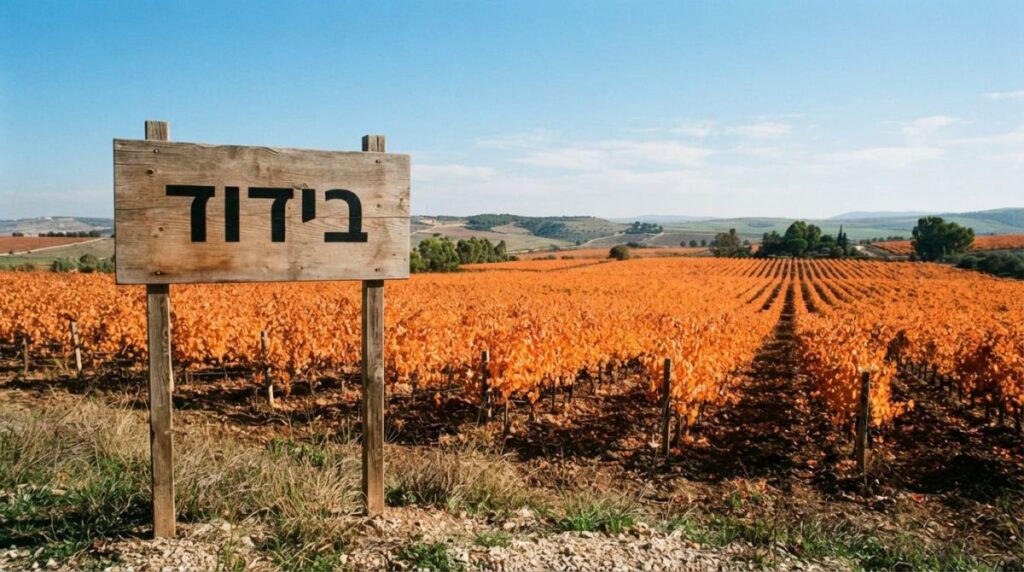
Anyone who goes out into the field in the months after the harvest does not need a lab to grasp the scale of the disaster. Large stretches of vineyard are painted bright orange and yellow, the clear and chilling sign of leafroll 3 (grapevine leafroll virus). There is hardly a single wine region in Israel, from the Upper Galilee through the Judean Hills to Mitzpe Ramon, still free of this plague. Thousands of dunams of vines are dying slowly, producing poor, inferior fruit and serving as giant biological incubators.
This is where the absurdity of the industry is exposed. The growers, bleeding money because of the harvest surpluses, cannot pay out of pocket for the high cost of uprooting and disinfecting. Instead, they have left the diseased plots standing to try and squeeze a little more yield out of them, however poor, just to scrape together a few more shekels.
The immediate result of that attempt is collective suicide. The mealybug that carries the virus jumps easily and efficiently from the dying vineyards to the thousands of new, expensive dunams planted here. We are simply serving the future of Israeli wine on a silver platter straight into the virus's mouth. All the millions of shekels invested in new plantings are going down the drain.

The bottom line: a national emergency plan
About four years ago, the Israel Wine Grape Board proved it knows how to act when it brought clean propagation material to the industry. But this time we have to understand that the problem is too big to be left solely to the growers. If we want to save anything of this industry, it will take immediate, coordinated and uncompromising action by five key bodies: the Israel Wine Grape Board, the Ministry of Agriculture, the Ministry of Finance, the large wineries and the Winemakers Association.
They all have to sit around one table, stop the ego wars and draw up a national emergency framework to present to the government ministries. In the current market, the very idea of replanting is an agronomic and economic crime. We do not need more vines; we have too much wine and too few buyers. The only way out is an aggressive reduction of vineyard area in Israel and the elimination of disease hotspots once and for all.
The Ministry of Agriculture must wake up and stop acting like a UN observer
Here is a proposal for the only realistic emergency plan that must reach the table of this government, or the one after it, as soon as that one starts working:
• Agricultural emergency order: mandatory immediate reporting and complete uprooting of every plot infected with leafroll 3.
• Strict disinfection protocol: mechanical uprooting of vineyards down to the roots, burning of the infected plant material, and aggressive chemical and thermal disinfection of the soil to wipe out any remaining virus and mealybugs.
• Compensation and set-aside budget: government compensation of NIS 10,000 for every infected dunam uprooted. Of that, NIS 3,500 would fully fund the uprooting and disinfection, and NIS 6,500 would serve as a set-aside grant to the grower for the loss of the asset.
• A total ban on planting: compensation conditional on taking the plot entirely out of production, or converting it to a crop other than grapevines. Not a single new vine seedling goes into that ground in the coming years.
• A body to make sure uprooting and disinfection are carried out: along the lines of the existing mechanism for the Xylella bacterium.
Only a surgical move like this will save the industry from itself and prevent a repeat of the economic and biological bloodbaths of the 2026 harvest.
The Ministry of Agriculture's response
"Over the years, the Ministry of Agriculture and Food Security, together with the Wine Grape Board and research and industry bodies, has worked to limit the spread of leafroll disease in grapevines. This has included publishing guidelines for monitoring the disease, reducing infection and uprooting infected vineyards; carrying out research to reduce reinfection in new plantings; and promoting a system for importing and growing virus-free propagation material.
The ministry attaches importance to preserving local production and strengthening growers and the Israeli wine industry. The Wine Grape Board, together with the ministry, signed an agreement with VITITEC to import virus-free varieties and rootstocks, set up a nucleus house that it owns, and regulated through contracts and protocols the establishment of mother plots under the supervision of the Board and the ministry. Since 2019, about 33,000 dunams of wine grape vineyards have been planted in Israel.
There is currently no cure for vines infected with the disease. The existing solution is to uproot infected vineyards and replant with clean propagation material, with a suitable waiting period before replanting, treatment of vine remnants and control of the mealybugs that carry the virus. Growers are given guidance accordingly. The ministry also allocated a budget to help growers with this, but because of the war and cuts to the ministry's budget, it was not possible to complete that assistance."
Warning: Excessive alcohol consumption endangers life and is harmful to health.



Comments
0