

Israeli exporters have enough troubles. Costs, competition, distribution hurdles and political uncertainty follow them into almost every attempt to enter a new market. The wine industry adds a particularly frustrating gap: years of work in the vineyard and the winery, followed by more years of building trade relationships, can run into a crisis that no one in the industry created and no one in it can solve. In that reality, it is worth looking at the tools that can help exporters prepare for change, spot opportunities and reduce risk.

In her opening talk at the Export Institute's meeting on October 13, CEO Nili Shalev presented the institute's plans for 2027. According to her, the institute is running more than 300 activities in 2026, serves about 5,000 companies a year, and works with 55 missions of the Foreign Trade Administration.
Shalev named target markets for expansion, among them India, Japan, the United Arab Emirates, Latin America and Eastern Europe, and presented services that include market research, leads, tender information, trade delegations and training. These figures describe the scale of the institute's activity and the infrastructure it offers. For an Israeli winery, the potential value lies in access to information and to people that are hard to reach alone. A small winery does not have an international research department. Even a large winery has to choose carefully where to invest, whom to work with and which risks it can afford.
Devoting a meeting to business intelligence fits exporters' needs well. Nili Shalev presented the institute's plans and the range of services it makes available to companies. That is important infrastructure, and presenting it ahead of 2027 gives exporters a basis for weighing their options. For Israel's wineries, the practical question is how to turn that infrastructure into information that helps them choose markets, identify risks and make better commercial decisions.
Business intelligence starts with checking our own assumptions
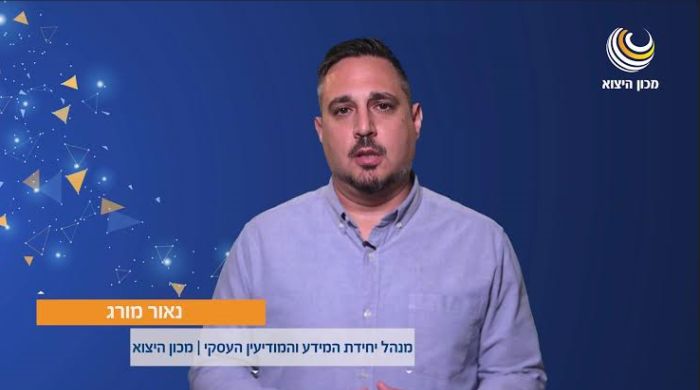
Later in the meeting, Naor Morag, head of information and competitive intelligence at the Export Institute, spoke about gathering and analyzing information on markets, customers, competitors and risks for business decision-making.
Morag stressed the need to test working assumptions, to tell fact apart from estimate and from the unknown, and to examine the quality of sources. He also discussed building scenarios for war and sanctions, and spotting early signs of change in operating conditions. These are important principles, because many business decisions begin with sentences that sound convincing: "this market has potential," "the importer loved it," "consumers there are looking for something new." Each of those sentences can be the start of an opportunity. Each of them also needs checking.
An importer who was enthusiastic at a tasting still has to show that he has customers, distribution and a willingness to invest in selling. A market that drinks a lot of wine is not necessarily a market that suits an Israeli winery's price point. One winery's success in a given country does not guarantee another's. This is where the approach Morag presented earns its value: find out what a decision rests on before committing to inventory, expenses and a trade relationship.
The bottle ages slowly. Reality changes fast
In the wine industry there is a large gap between the time it takes to build a business and the time in which conditions can change. A winery invests in vineyards, in making the wine, in aging it and in branding. Entering a foreign market, it adds investment in a distributor, tastings, sales staff and relationships with restaurants and shops. The goal is to build an audience that will order again, vintage after vintage. Then a political or security crisis arrives, and a question unrelated to the quality of the wine joins the deal: how does the wine's country of origin now affect the willingness to buy it?
Business intelligence can help understand the change and prepare for it. It cannot guarantee that the importer will keep ordering or that the consumer will separate the wine from Israel's policies. That is a limit worth knowing. Good market research gives a basis for a decision under certain conditions; when the conditions change, the decision has to be updated too. That is why business intelligence in the wine industry has to accompany the business over time.
Poland as a test case: what to know before drawing conclusions
Poland is an example of a market where it is worth examining the commercial opportunity and the political and public environment side by side. It cannot stand in for every export market, but it helps sharpen the questions.
A winery owner who wants to grow there needs to know who buys his wine, at what price and through which channels. Alongside that, he needs to check whether attitudes toward Israel affect the importer's decisions, restaurants' willingness to carry the wine and consumer behavior. These are separate checks. A negative opinion of Israel does not prove that the person holding it will boycott Israeli wine. On the other hand, one successful order does not prove that the business is immune to change.

You need to find out what is actually happening. Are importers still ordering? Are they cutting quantities? Are restaurants changing their wine lists? Is there a gap between sales to shops and sales to consumers? And does a given difficulty stem from the political situation, from price, from distribution, or simply from the wine not suiting the audience it was offered to?
That precision also matters for spotting opportunities. A complicated market can include committed importers and loyal customers. A decision to give it up calls for serious checking, exactly like a decision to invest more in it.
Three layers of information
To apply the principles Morag presented, it helps to separate three layers of information.
The market itself: who imports wine, which styles sell, at what prices, what it costs to enter and how distribution is structured. This is an essential basis for checking whether a market is worth it.
Customer behavior: are repeat orders coming in, are payments on time, are distributors investing in marketing, and does the pace of sales justify another shipment? This calls for ongoing data and direct conversations with partners.
The political and public environment: changes in trade policy, developments in relations between countries and events that could affect the business. These can be tracked and turned into scenarios, while accepting that some events will surprise even those who prepared well.
The mistake is to treat information from one layer as if it answers the questions in the others. A satisfied importer does not cancel out political risk. A worrying newspaper headline does not, on its own, tell you what happened to sales. The professional work is to connect the layers, and to check again and again whether the picture has changed.
What a winery can do with the information
The first step is entering a market gradually. A limited number of wines, a suitable distributor and defined sales channels make it possible to learn before taking on bigger commitments.
The second step is tracking results. Alongside the number of bottles the winery shipped, it matters how many were sold, to whom and at what pace. Stock that has moved to a warehouse abroad still has to find a buyer.
The third step is preparing scenarios. What do you do if sales fall by 15%, 30% or 50%? These are sample working scenarios, not forecasts. The question is what each drop means for cash flow, inventory and the marketing budget, and what can be done in each case.
At the same time, a winery should look at how dependent it is on a single market or distributor, and set in advance quantities, payment terms, responsibility for stock and options for ending the relationship. These are commercial decisions that should rest on information, not on a sense of security alone.
From the Export Institute's infrastructure to focused work for the wine industry
The range of services and connections Shalev presented points to a chance to link wineries' needs with professional capability broader than any single winery has. Market research can help choose a target country. Vetting trade partners can support the choice of a distributor. The link with Foreign Trade Administration missions may help in understanding local conditions and meeting local players. Training can help wineries improve the way they examine information and make decisions.
It is important to distinguish between the services the institute presented and the adjustments for the wine industry suggested here. Market research, business information, links with missions and training are part of the package described at the meeting. Ongoing tracking of changes in wine sales, early identification of importers' difficulties and targeted alerts to wineries are directions worth examining and developing. The question is how well they meet exporters' commercial needs, whether the information arrives in time, and whether it helps with real decisions.
Adapting it to the wine industry could make that package even more useful. There is room to consider focused meetings with economic attachés, reviews of wine markets, a survey of wineries' needs and the sharing of commercial insights from the field. It is also important to make clear to wineries what they can ask for, how to ask, which services are available and on what terms. For a winery owner busy with production, sales and running the business, accessibility and clarity are part of the value of the service.
Wineries themselves also have a role in building the picture. They meet importers and buyers, hear objections, notice changes in orders and learn which marketing efforts bring results. Sharing that kind of information, while keeping commercial confidentiality, can help tell a problem at one winery apart from a broad shift in the market.
Choosing new markets should also be a matter of fit. Japan, India, the United Arab Emirates and the countries of Latin America differ from one another, and Israel's wineries differ in size, price and supply capacity. The goal is not to mark more countries on the map, but to find for each winery opportunities it can develop and sustain over time.

Business intelligence lowers the price of surprise
A winery owner cannot control political reality. He can improve the information he relies on, vet his partners, measure his sales and prepare alternatives. A public body cannot guarantee success in every market either. It can help the exporter ask better questions, reach more sources and make decisions from a wider picture.
The Export Institute's meeting presented plans and an infrastructure of services and connections, alongside professional principles for examining markets and risks. Nili Shalev and the speakers who took part deserve credit for holding the discussion and presenting the tools. A natural next step would be to examine how well they fit the particular needs of the Israeli wine industry.
The test is not the number of activities, training sessions or market studies, but the benefit they bring exporters: can a winery get relevant information in time, spot a change in a market before it becomes a crisis, choose better trade partners and make fewer decisions based on untested assumptions?
Business intelligence does not guarantee success and cannot prevent a political crisis; it can help a business prepare better for a changing reality. In an industry where investment spans years and orders can vanish within months, that is a test with real economic weight.
Warning: Excessive alcohol consumption endangers life and is harmful to health.

Comments
0